
to leave a comment.
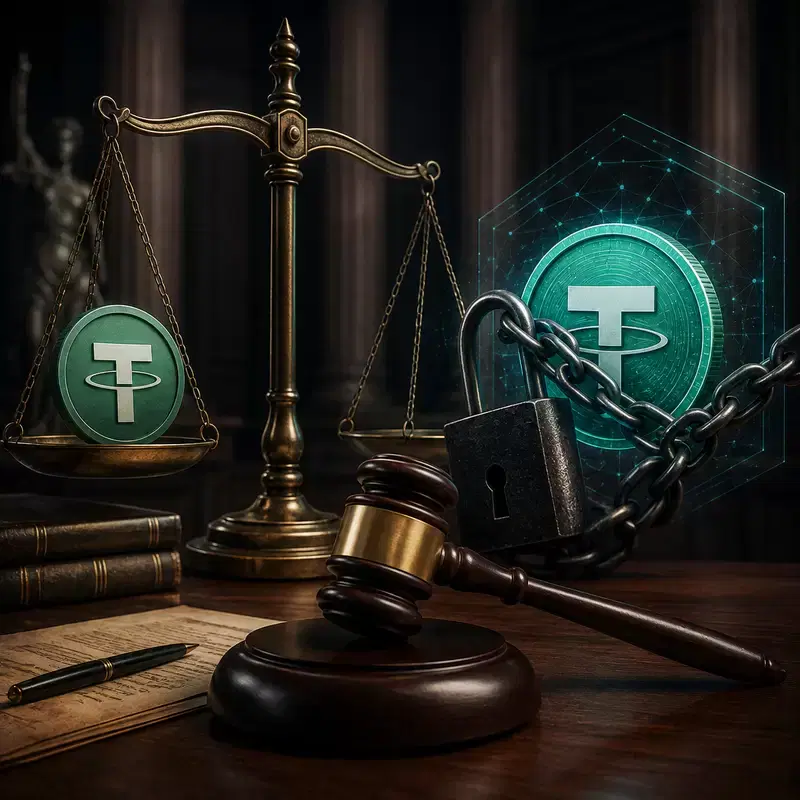
▲ Tether (Tether, USDT), Cryptocurrency Lawsuit/AI Generated Image
Two key figures from Ripple have argued that "stablecoin issuers should be able to respond to illicit funds" in a lawsuit surrounding Tether's freezing of 42,417,785.62 USDT.
According to U.Today on September 2 (local time), David Schwartz, Ripple's Honorary Chief Technology Officer (CTO), defended Tether's reasoning in the debate surrounding its authority to freeze assets. The lawsuit arose when two Thai businessmen challenged the freezing of 42,417,785.62 USDT. The funds are reportedly linked to an investment fraud case totaling $61 million.
Tether blacklisted 10 Ethereum (ETH) addresses on October 30, 2025. At the time, there was an unofficial request from the U.S. Homeland Security Investigations (HSI), but no court warrant had been issued. The warrant was issued approximately four months later, on February 19, 2026. The warrant instructed that the frozen USDT be burned and the same amount re-issued to a wallet managed by the U.S. government.
The plaintiffs are not disputing the connection between the fraud case and the funds but are challenging whether Tether had the authority to freeze assets first without a court warrant. They argue that the USDT in question was acquired in the secondary market, not directly purchased from Tether, and that there was no contractual relationship with Tether. The plaintiffs are demanding the unfreezing of the wallet, prohibition of USDT burning, and compensation for damages.
Schwartz has emphasized that stablecoins are assets linked to the issuer's legal obligation to redeem. He explained that if a legal judgment eliminates the issuer's redemption obligation, but the original rights remain on the blockchain, then the ledger and the actual legal relationship become inconsistent. Schwartz previously stated, "The essence of a stablecoin is that it represents the issuer's legal obligation to redeem it for fiat currency," and that a court order can change that obligation.
This lawsuit focuses on whether freezing assets before a warrant is issued is legally permissible, rather than on the fact that Tether can technically freeze assets. The court's decision on the boundaries between Tether's freezing authority and judicial procedures could influence the debate surrounding stablecoin issuers' asset control powers.
[Article Key Summary]
-Two Thai businessmen filed a lawsuit alleging that Tether froze 42,417,785.62 USDT approximately four months before a warrant was issued.
-David Schwartz stated that stablecoins represent the issuer's legal obligation to redeem, thus requiring freezing and recovery functions to reflect legal situations.
-The core issue of the lawsuit is whether Tether had the authority to freeze USDT based solely on an unofficial request from an investigative agency, without a court warrant.
*Disclaimer: This article is for investment reference only, and we are not responsible for any investment losses based on it. The content should be interpreted for informational purposes only.*
Newsletter
Get key news delivered to your email every morning
to leave a comment.