
to leave a comment.
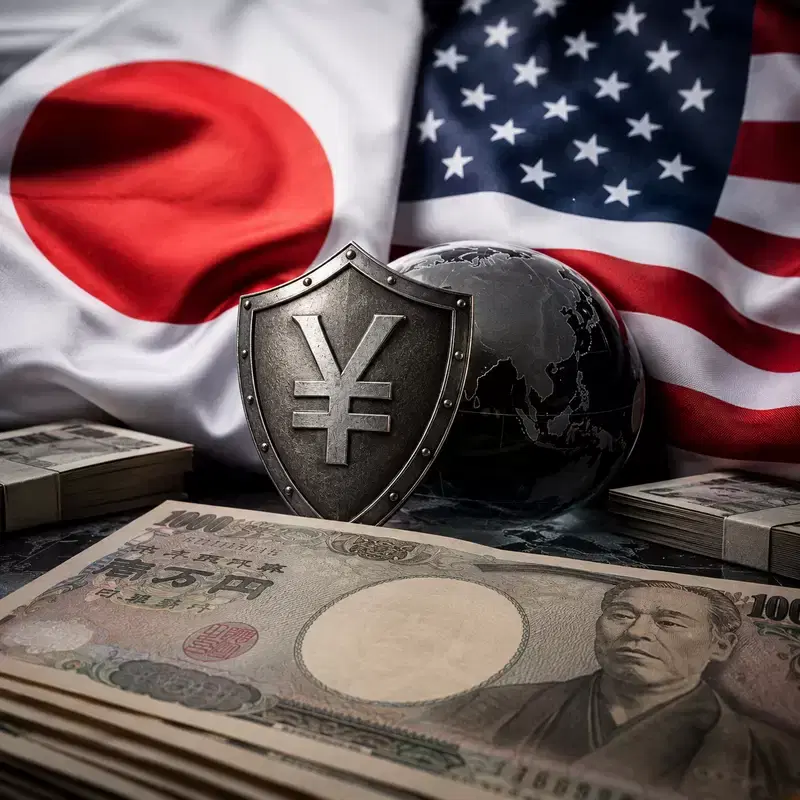
▲ Japan, US, Yen (JPY)/AI Generated Image
Japanese and US financial authorities have joined hands to defend the yen.
Japan's Ministry of Finance announced on Monday that it conducted a yen-buying intervention last Friday in coordination with the US Treasury Department. This is an unusual move for the two allies to jointly curb sharp fluctuations in the yen. Japan stated that it is ready to intervene again if necessary, adding that it "will not hesitate to engage in further coordinated interventions in the future" and is in close communication with the US Treasury Department. Finance Minister Satsuki Katayama also emphasized that Japan "continues to communicate closely and monitor the situation with its counterparts at the US Treasury Department."
The yen fell to 163.73 yen per dollar last Thursday, then strengthened to 157.57 yen on Friday, and traded at 157.70 yen per dollar on Monday. The yen's recent depreciation to its lowest level in approximately 40 years has raised concerns for the Japanese government.
The Ministry of Finance explained that this intervention was carried out in accordance with the 'Joint Statement by the Finance Ministers of Korea, Japan, and the US' announced in September 2025, and was a measure to respond to "the recent excessive volatility and disorderly movements of the yen." The Ministry also revealed its plan to utilize the Federal Reserve's Foreign and International Monetary Authorities (FIMA) Repo Facility in the future. This facility allows approved foreign central banks and monetary authorities to temporarily exchange US Treasury securities for short-term dollar funding.
US Treasury Secretary Scott Bessent also confirmed the coordinated intervention in a statement, saying, "Friday's coordinated foreign exchange action curbed disorderly movements in the yen." He added, "The Treasury Department continues to communicate closely and monitor the situation with its counterparts at the Japanese Ministry of Finance and the Bank of Japan. We will not hesitate to participate in further coordinated interventions in the future." Bessent further expressed strong support for Japan's "decisive market and monetary measures to correct the significant undervaluation of the yen," thereby backing the Japanese government's overall policy direction.
US President Donald Trump had earlier stated last week that the US participation in the coordinated intervention was to support Japan and for global economic stability. Trump told reporters aboard Air Force One on Sunday, referring to the "good relationship" between the two allies, "Japan wanted a little help, and we're always there for Japan." He added, "Above all, this action was a sign of friendship."
Robin Brooks, a senior fellow at the Peterson Institute for International Economics, pointed out in his Substack post that this coordinated intervention could weaken rather than strengthen confidence in the yen. He added, "If the US had sold euros instead of dollars to buy yen, investors might interpret this as US authorities being considerate not to make Japan sell US Treasury bonds to fund the intervention."
The market reacted with surprise to reports that the US sold euros instead of dollars to buy yen. This is because coordinated interventions have traditionally been funded by dollar assets. Brooks said, "This change in method, in my opinion, actually reduces the effectiveness of US participation. Because it will keep the market questioning why the US didn't simply fund the yen purchase with dollars."
[Article Summary]
-Japan's Ministry of Finance and the US Treasury Department announced that they conducted a coordinated intervention to buy yen last Friday.
-The yen fell to 163.73 yen per dollar on Thursday but strengthened to the 157 yen range after the intervention.
-Brooks pointed out that the US selling euros instead of dollars to buy yen could actually reduce the effectiveness of the coordinated intervention.
*Disclaimer: This article is for investment reference only, and we are not responsible for any investment losses based on it. The content should be interpreted for informational purposes only.*
Newsletter
Get key news delivered to your email every morning
to leave a comment.