
to leave a comment.
Next month, 'debt-to-equity ratio of 200% or less' to be introduced in the Enforcement Decree of the Special Act... 1-year grace period
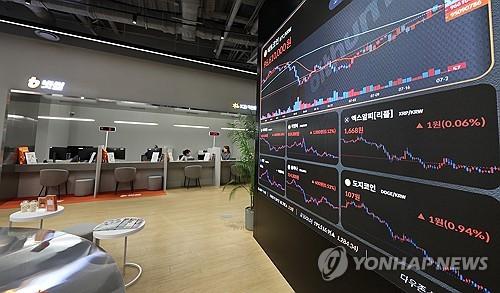
It has been revealed that the majority of Virtual Asset Service Providers (VASPs) are facing a survival crisis as they fail to meet the 'debt-to-equity ratio of 200% or less' standard, a new entry regulation to be introduced next month.
Operators are planning to attract investment and improve their financial structure during the 1-year grace period.
According to the Financial Supervisory Service's Electronic Disclosure System (DART) and the Small and Medium Business Information System on the 30th, 12 out of 24 operators whose financial status was confirmed as of the end of last year had a debt-to-equity ratio exceeding 200%.
Most were in a state of full capital impairment, with total liabilities exceeding total assets.
Although financial statements were not disclosed, it is estimated that up to 16 entities, including four that were in a state of full capital impairment based on past quarterly figures, failed to meet the standard.
This amounts to 57% of the 28 Virtual Asset Service Providers reported to the Financial Intelligence Unit (FIU).
With the amendment to the Enforcement Decree of the Special Act on the Reporting and Use of Specific Financial Transaction Information (Special Act), starting next month on the 20th, Virtual Asset Service Providers and major shareholders must have a debt-to-equity ratio of 200% or less based on the financial statements at the end of the most recent quarter.
The financial authorities have decided to provide a 1-year preparation period. However, it has not yet been specified whether businesses must immediately cease operations if they fail to meet the requirements thereafter.
The four domestic KRW exchanges (Upbit, Bithumb, Coinone, Digital X) all meet this requirement after excluding user deposits from liabilities in accordance with the Virtual Asset User Protection Act.
In addition, four custodian companies such as Korea Digital Asset, Korea Digital Asset Custody, Infinite Block, and BloSafe, two wallet service providers such as Hectowalletone and AhnLab Blockchain Company, blockchain infrastructure company DSRV Labs, and institutional financial service provider Hyperithm also meet this requirement.
Gopax is currently in a state of full capital impairment, but it is expected to be resolved once the issue of compensation for damages from its virtual asset deposit service 'GoFi' is addressed.
A Gopax official explained, "Currently, most of our liabilities are related to GoFi, so once a repayment plan is established, the debt-to-equity ratio issue will be resolved."
The situation for crypto exchanges and custodian companies is not easy. As the trading slump continues and institutional arrangements such as the corporate market are not yet finalized, it is difficult to expect an improvement in the debt-to-equity ratio through increased revenue.
A representative of one company expressed concern, "Unless we receive external investment, the possibility of improvement is very limited, and if we fail to attract investment, we may have to close down."
Some companies are reportedly discussing new investments with domestic financial institutions or foreign capital.
An industry official stated, "The market is difficult, and with a 1-year deadline, the conditions are not favorable." He added, "Systems and regulations must be put in place, such as the establishment of a Digital Asset Framework Act and the opening of the institutional market, to allow for various virtual asset businesses."
Newsletter
Get key news delivered to your email every morning
to leave a comment.