
to leave a comment.
At USTR hearing, concerns about "unnecessary and inappropriate" raised..."Preferential treatment needed" argued
Section 301 results on 'overproduction' expected soon...New tariff rate on South Korea draws attention
On the 9th (local time), the South Korean government conveyed to the U.S. side its position that the U.S. Trade Representative (USTR)'s decision to impose a 12.5% tariff on South Korea as a result of the Section 301 investigation related to 'forced labor' issues is unjust.
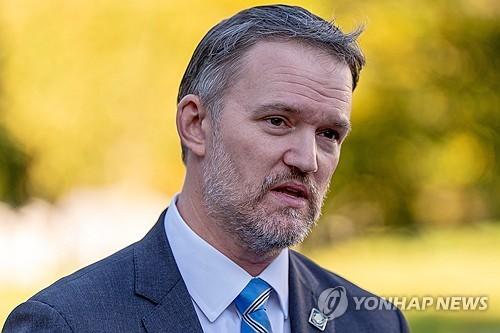
Lee Seung-heon, Commercial Counselor at the Korean Embassy in the U.S., attended a USTR-hosted public hearing held at the U.S. International Trade Commission (USITC) in Washington D.C. on that day, and presented these opinions regarding the tariff measures that the USTR announced on the 2nd of last month.
It is reported that Counselor Lee expressed concern in his testimony that the U.S. tariff measures may not adequately reflect the specific situation regarding South Korea's imports of forced labor goods.
He also explained that South Korea has been making efforts to resolve forced labor issues through domestic and international norms, such as developing the 'K-ESG Guide' and promoting the 'OECD Guidelines for Multinational Enterprises,' and that the intention to cooperate with the United States on forced labor issues was confirmed in the joint factsheet resulting from last year's bilateral summit.
Counselor Lee reportedly emphasized the South Korean government's position that the current U.S. measure is neither appropriate nor necessary.
Furthermore, it is understood that he stressed that even if the U.S. deems it necessary to impose a certain level of tariffs on the countries subject to this investigation, South Korea, which had previously reached a separate trade agreement with the Trump administration, should receive more favorable treatment.
In response, the USTR side reportedly requested a detailed explanation of South Korea's policies to eradicate the import of forced labor goods and also asked for a timeline related to specific measures and plans.
This USTR Section 301 investigation was initiated to replace existing tariffs after the Federal Supreme Court ruled in February that the reciprocal tariffs imposed by then-U.S. President Donald Trump on virtually all trading partners worldwide due to an economic emergency were illegal.
As a result of the investigation, the USTR announced on the 2nd that it plans to impose additional tariffs of 10% or 12.5% on imports from 60 economic entities, and South Korea was included in the group of 46 economic entities subject to a 12.5% tariff. This group consists of countries that the U.S. side judged to have failed both in implementing and effectively enforcing import bans on forced labor goods.
This public hearing was arranged to submit dissenting opinions on these investigation results, but it is uncertain whether the results can be overturned or modified even if opinions are presented.
Prior to the hearing, the government and the Korea International Trade Association (KITA) had requested in their written submission that "the 12.5% additional tariff on South Korean products lacks grounds and should be reconsidered, and if tariff imposition is unavoidable, it should be lowered to 10%."
The USTR is also conducting a Section 301 investigation not only on forced labor but also on 'structural overproduction,' and a preliminary public hearing related to this was held on the 5th.
Immediately after the ruling invalidating reciprocal tariffs, etc., the Trump administration has been imposing a 10% 'global tariff' on all trading partners worldwide based on Section 122 of the Trade Act.
Since this global tariff can only be imposed for a maximum of 150 days, there is much speculation that the 'overproduction' investigation results will be released before late July, when this period ends, and combined with the forced labor investigation results, new tariffs will be introduced on trading partners.
Last year, South Korea agreed to a 15% tariff rate and signed a new trade agreement with the United States during the period of President Trump's imposition of reciprocal tariffs and trade negotiations.
Ultimately, the level of tariff rate to be applied to South Korea in this Section 301 investigation is of interest.
However, Minister of Trade, Industry and Energy Kim Jung-kwan stated that he had a video conference with U.S. Commerce Secretary Howard Lutnick on the 3rd of last month, and that Secretary Lutnick told him "not to worry" regarding concerns that South Korea's tariff rate might exceed 15%.
Newsletter
Get key news delivered to your email every morning
to leave a comment.