
to leave a comment.
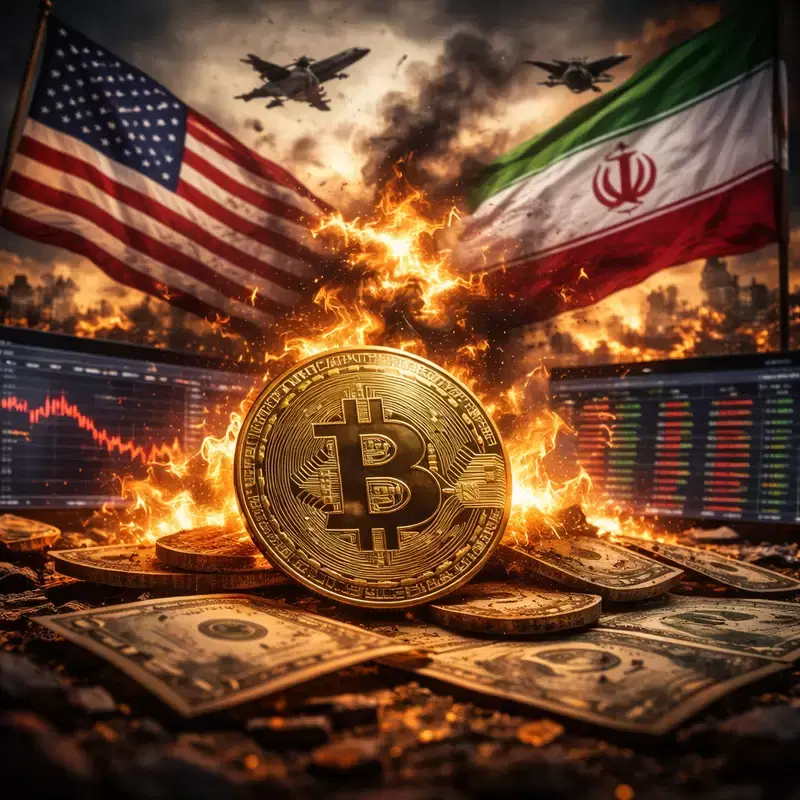
▲ US, Iran, Bitcoin (BTC)/AI-generated image
The escalating military tensions in the Strait of Hormuz are shaking global financial markets, leading to increased volatility in the virtual asset market. As peace talks between the US and Iran falter and geopolitical risks reignite, international oil prices and major asset prices have begun to fluctuate simultaneously.
According to crypto media outlet Coingape on July 7 (local time), Bitcoin (BTC) prices, which had briefly rebounded on expectations of a US-Iran peace agreement, are now facing a new test amid the risk of conflict in the Strait of Hormuz. Blockchain data analytics firm Santiment assessed that the news of a peace agreement between the two countries acted as a catalyst, turning fear-ridden virtual asset investor sentiment into an opportunity. However, with the uncertainty in the Strait of Hormuz not fully dissipating, the market appears to be sinking back into a thick fog.
Peter Brandt, considered a master of chart analysis, analyzed that Bitcoin is currently moving strictly according to classic chart principles. Brandt directly refuted the "bear flag" diagnosis raised by some regarding the current price correction. He argued that a typical flag pattern usually does not last longer than 6 to 8 weeks, but the current downward channel trend is much more prolonged.
Some market participants, including virtual asset analytics firm CryptoQuant, have consistently warned of downward pressure, suggesting that Bitcoin could fall to the realized value baseline of $53,600. Conversely, whenever news of the full opening of the Strait of Hormuz and progress in peace talks emerged, Bitcoin attracted dip-buying and laid the groundwork for a rebound. Ultimately, it is critical to firmly defend the key watershed support level of $65,000 to resume a full-fledged trend reversal and rally.
Over the past 24 hours, Bitcoin fluctuated between a low of $63,634 and a high of $65,927, rebounding by over 3%. The 45% surge in trading volume during the same period clearly demonstrates the intense struggle among investors facing significant geopolitical variables. While falling US 10-year Treasury yields and a declining US Dollar Index (DXY) create a favorable environment for risk assets, changes in the situation surrounding the Strait of Hormuz remain the biggest variable determining Bitcoin's future direction.
[Key Article Summary]
-Bitcoin price volatility has expanded due to the instability of the US-Iran peace agreement and the re-escalation of tensions in the Strait of Hormuz.
-Peter Brandt analyzed that the current price trend is a downward channel, not a bear flag, and that support at $65,000 is essential for recovery.
-Amid falling US Treasury yields and the Dollar Index, Bitcoin's trading volume surged by 45%, with a fierce battle around $65,000.
*Disclaimer: This article is for investment reference only, and we are not responsible for any investment losses based on it. The content should be interpreted for informational purposes only.*
Newsletter
Get key news delivered to your email every morning
to leave a comment.