
to leave a comment.
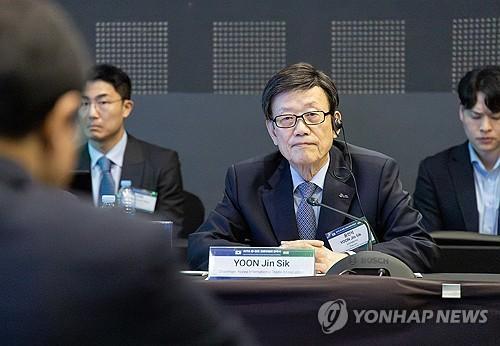
Submitted opinion to USTR... "Difficult to prove specific cases of forced labor or causal link to US damage"
"Prohibition of forced labor through ratification of international treaties and domestic laws... Korean companies contribute to US investment and production expansion"
As the US Donald Trump administration announced a 12.5% tariff on South Korea based on the results of its Section 301 investigation related to 'forced labor', the Korea International Trade Association (KITA) requested the Trump administration to suspend implementation or lower the tariff rate.
In an opinion submitted to the Office of the United States Trade Representative (USTR) on the 6th (local time) under the name of KITA Chairman Yoon Jin-sik, KITA requested to "reconsider the imposition of an additional 12.5% tariff on South Korean products," asking to suspend the tariff implementation, or if suspension is difficult, to lower the additional tariff rate to 10%.
As grounds for the request, KITA stated, "It is difficult to prove specific cases or causal relationships indicating that certain Korean products used raw materials produced by forced labor and caused significant damage to US companies."
It continued, "If the US imposes broad additional tariffs on Korean products merely because there are no official measures to prohibit imports produced by forced labor, such measures will not help strengthen the economic interests and industrial competitiveness of either the US or Korea."
KITA also emphasized that while South Korea does not have explicit import prohibition measures for products produced by forced labor as defined by the USTR, it strictly prohibits forced labor through the ratification of relevant international treaties and the enactment and enforcement of domestic laws.
Furthermore, it explained that many Korean companies implement internal policies or codes of conduct that strictly prohibit transactions related to goods produced by forced labor.
KITA stated, "Korean companies' expansion of investment and production in the US has strengthened the foundation of US manufacturing, created jobs, and contributed to supply chain stability," and warned that if the US imposes additional tariffs on intermediate goods used in Korean companies' US investment and production, it could actually cause supply chain disruptions.
KITA then requested, "Please suspend the implementation of additional tariffs on South Korean products to provide an opportunity for both countries to discuss mutual cooperation and regulatory alignment."
It also stated, "If implementation cannot be postponed, we request that the additional tariff rate be lowered to 10%." The USTR had previously announced that it would impose a 10% tariff on countries that have implemented or promised to implement import prohibition measures related to forced labor, and KITA requested that if tariff imposition is unavoidable, the same tariff be applied to South Korea.
KITA also requested that products with a low risk of involvement in forced labor, products for which there is no specific evidence of significant damage to US commerce, and products from companies that implement strict policies prohibiting trade in goods produced by forced labor be excluded from the scope of application.
After the Supreme Court's ruling invalidating reciprocal tariffs in February, the Trump administration imposed a 10% 'global tariff' on all trading partners worldwide based on Section 122 of the Trade Act.
Global tariffs under Section 122 of the Trade Act can only be imposed for a maximum of 150 days, so the Trump administration is accelerating the introduction of tariffs based on the Section 301 investigation before this period ends in late July.
Section 301 of the Trade Act grants the administration the authority to respond to unfair, unreasonable, and discriminatory acts, policies, and practices of foreign governments that restrict or burden US trade, including through the imposition of tariffs.
In March, the USTR initiated investigations related to 'overproduction' and 'forced labor' based on Section 301 of the Trade Act. South Korea was included in both investigation areas.
On the 2nd of last month, the USTR announced that, based on the results of the Section 301 investigation related to forced labor, it plans to impose additional tariffs of 10% or 12.5% on imports from 60 economies that have failed to prevent trade in products produced by forced labor.
In this regard, the government plans to attend the USTR public hearing in Washington D.C. on the 9th to state its position.
Concerns are rising that if the 12.5% additional tariff based on the forced labor investigation results is finalized, and subsequent tariff measures related to the overproduction investigation are added, the tariff rate imposed by the US on South Korean products could be higher than the existing reciprocal tariff (15%).
Newsletter
Get key news delivered to your email every morning
to leave a comment.