
to leave a comment.
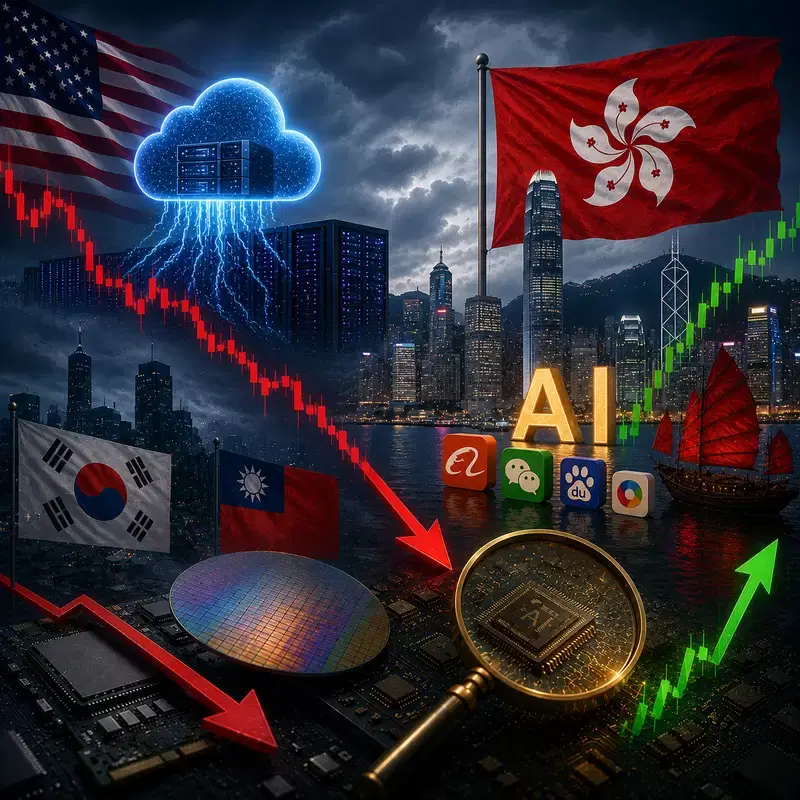
▲ US, South Korea, Taiwan, Semiconductor, Stock price plunge, Bear market, Artificial Intelligence (AI), Hong Kong/AI generated image
US-origin fatigue in AI investment led to a shock for South Korean and Taiwanese semiconductor stocks. On the other hand, Hong Kong Big Tech and Chinese AI hardware stocks are once again drawing market attention as undervalued rebound candidates. As Meta Platforms' (META) plan to lease AI computing shook the myth of hyperscaler capital expenditure, Asian stock markets diverged into two trends: semiconductor overheating and bargain hunting in Chinese tech stocks.
Bloomberg news program The China Show reported on July 2 (local time) that the sell-off in US chip stocks spread to Asian markets, raising questions about the sustainability of the AI rally. The program pointed out that news of Meta considering a cloud business to lease its surplus AI computing power to external parties changed the market narrative. Previously, investors believed that hyperscalers would use all computing resources for internal demand, but after Meta's plan, doubts like “Was all that really necessary?” stimulated the sell-off of semiconductor, memory, and equipment stocks.
The shock was concentrated in South Korea and Taiwan. South Korea, with its large proportion of memory, and Taiwan, with its foundries and AI supply chain, are structured to react sensitively when hyperscaler investment outlooks waver. Bloomberg Economics analyzed that if the AI bubble bursts, the impact could be similar to the dot-com bubble collapse rather than the 2008-style financial crisis. It estimated that the US GDP growth rate could decrease by 1.5 percentage points over one year, and the global impact could amount to $1.6 trillion. Analysis also suggested that more than 4% of Taiwan's GDP and approximately 2% of South Korea's could be at risk.
China-related variables were mixed. Apple (AAPL) is reportedly pursuing the purchase of memory chips from Chinese manufacturers amid a global memory supply shortage, a shortage cited as a factor driving up Apple product prices by approximately $500 per unit. However, some Chinese companies are on the US Department of Defense blacklist and Department of Commerce's Entity List, making it difficult to avoid political scrutiny. Conversely, ByteDance is reportedly planning to build a 200-megawatt data center in Brazil and expand it to 1 gigawatt in the long term. Brazil's strength was highlighted by the fact that approximately 90% of its electricity comes from renewable energy sources such as solar, wind, and hydropower.
In the Chinese stock market, a selective rebound logic emerged. Eva Lee of UBS Global Wealth Management cited earnings recovery as the key driver for Chinese companies in the second half of the year, stating a preference for hardware, AI supply chain, and semiconductor-related stocks over internet platforms. Lee said, “Earnings are the key driver, no matter which market you're talking about.” She analyzed that while AI capital expenditure burdens suppressed profit forecasts until Q2, reduced delivery subsidies, AI monetization, and increased token charges could support performance in the second half. Profit growth for the hardware sector was projected at approximately 45%.
The Hong Kong market saw a simultaneous sharp drop in chip stocks and a rebound in big tech. The Hang Seng Tech Index rose by about 1%, with Alibaba, Tencent, Meituan, and Baidu showing significant upward trends. In contrast, chip-related stocks experienced double-digit declines. Exchange rate and interest rate variables also shook the market. Remarks by Kevin Warsh were interpreted as some dovish signals, but analysis suggested that strong US employment figures could increase the likelihood of a July interest rate hike. At the time, the market reflected a 20-30% chance of a July hike, whereas not long ago, that possibility was close to 0%. The Korean Won was burdened by a $97 billion outflow of foreign equity funds since the beginning of the year and recent outflows for 9 consecutive trading days.
[Key Article Summary]
-Meta's plan to lease AI computing shook the outlook for hyperscaler capital expenditure, triggering a sell-off in South Korean and Taiwanese semiconductor stocks.
-Bloomberg Economics analyzed that if the AI bubble bursts, the global impact could reach $1.6 trillion, with Taiwan and South Korea being the most vulnerable.
-In the Chinese market, chip stocks plummeted, but Hong Kong Big Tech, AI hardware, and the semiconductor supply chain were mentioned as undervalued rebound candidates.
*Disclaimer: This article is for investment reference only, and we are not responsible for any investment losses based on it. The content should be interpreted for informational purposes only.*
Newsletter
Get key news delivered to your email every morning
to leave a comment.