
to leave a comment.
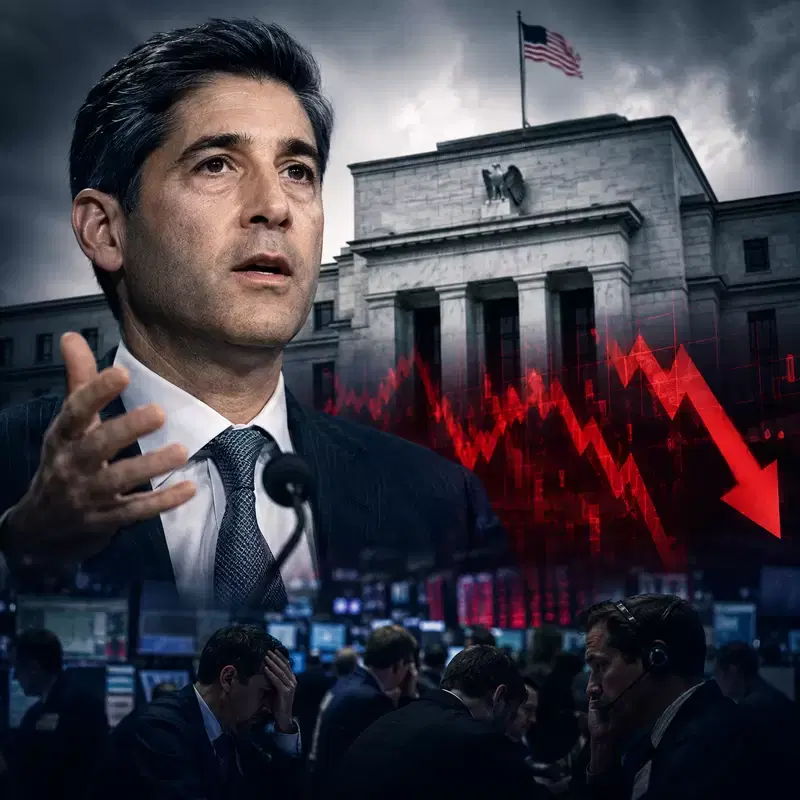
▲ Federal Reserve (Fed), U.S. Stock Market/AI Generated Image
As Kevin Warsh, Chairman of the U.S. Federal Reserve (Fed), announced changes to the overall operation of the Fed in his first press conference after taking office, Wall Street, which had been relieved by the interest rate freeze, abruptly changed course, causing the Dow Jones Industrial Average to plummet by over 500 points.
According to U.S. economic media outlet Barron's on June 17 (local time), the Dow Jones Industrial Average fell by 507 points (1%) from the previous trading day, while the S&P 500 and Nasdaq Composite also dropped by 1.2% and 1.3%, respectively. Major indices moved in a narrow range before the Federal Open Market Committee (FOMC)'s monetary policy announcement, but quickly expanded their losses after Warsh's press conference ended.
The Fed maintained its target range for the benchmark interest rate at 3.5% to 3.75%. However, in the newly released dot plot, 9 out of 18 committee members who submitted forecasts expected interest rates to be higher than the current level by the end of the year. In March, not a single committee member had predicted an interest rate hike, and one member did not participate in submitting this forecast.
The interest rate futures market reacted immediately. According to CME FedWatch, the probability of the benchmark interest rate remaining at 3.5% to 3.75% by December plummeted from 40.3% the previous day to 22.9%. The probability of an interest rate hike in October jumped from 38.6% to 60.7%, and the probability of a total 0.5 percentage point increase by the end of the year also rose from 14.8% to 27.1%.
Tom Essaye of Sevens Report Research stated, "Neither the Fed nor Warsh was hawkish." He added, "The problem is that Warsh stated he would consider changing virtually everything, and remarks that shake a system that has been working well for the market can only increase anxiety." Steve Sosnick, chief strategist at Interactive Brokers Group (IBKR), also commented, "Warsh clearly laid out his policy agenda and appeared much less responsive to the interest rate cuts desired by U.S. President Donald Trump than the market expected."
Although Trump emphasized the possibility of reopening the Strait of Hormuz, citing a memorandum of agreement with Iran, it failed to reverse investor sentiment. Concerns that the Fed's policy operations and market communication methods might change, rather than geopolitical tension easing, dominated the New York stock market that day.
*Disclaimer: This article is for investment reference only, and we are not responsible for any investment losses based on it. The content should be interpreted for informational purposes only.*
Newsletter
Get key news delivered to your email every morning
to leave a comment.