
to leave a comment.
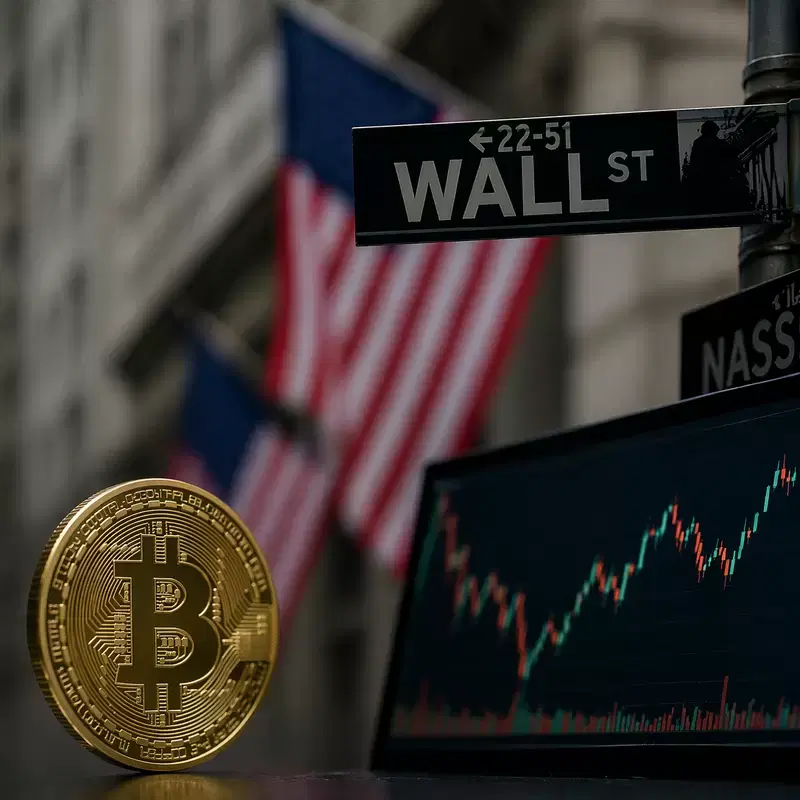
▲ Bitcoin (BTC), Wall Street/AI-generated image
Bitcoin (BTC) failed to avoid a downturn even with the inauguration of Kevin Warsh, considered a pro-cryptocurrency figure, as Chairman of the Federal Reserve. Bitcoin fell to $74,190 on Saturday, reaching its lowest level in about a month.
Cointelegraph, on May 24 (local time), cited rising short-term Treasury yields and Warsh's past hawkish remarks as reasons for Bitcoin's weakness. According to the article, the U.S. 2-year Treasury yield rose to 4.14%, its highest level since February 2025. The 2-year Treasury yield is a closely watched indicator for short-term benchmark interest rate expectations, and its movement above the Fed's current target range of 3.50% to 3.75% was interpreted as a sign that the market does not anticipate a quick shift to easing under Warsh's leadership.
According to CME data, traders expect the Fed to keep interest rates frozen for most of 2026, and futures prices are even reflecting the possibility of a 25bp hike in December. BCA Research data also explained that over the past 30 years, when the 2-year Treasury yield rose above the federal funds rate, the Fed generally raised rates. Conversely, when the 2-year Treasury yield fell below the federal funds rate, there were many instances where expectations for future rate cuts increased.
The interest rate burden acted as a direct pressure factor on Bitcoin. Bitcoin is typically classified as an asset where bullish arguments strengthen in environments of falling Treasury yields, low real interest rates, and accommodative liquidity. However, with short-term rates rising and the possibility of further tightening highlighted, the effect of the new pro-cryptocurrency Fed chairman's inauguration was not fully reflected in the market.
In the past, Warsh made favorable remarks about Bitcoin, criticized central bank digital currencies, and supported an expanded role for private sector financial innovation. While these are positive factors for cryptocurrency investors, a different assessment emerged regarding monetary policy. Analyst Crypto Patel, in an X (formerly Twitter) post on Saturday, described Warsh as a "well-known inflation hawk," pointing out that he is not a dove. He analyzed that inflation risks from the Iran war and labor market pressures could limit interest rate cuts.
"Being crypto-friendly on the regulatory front does not mean being dovish on the interest rate front," Patel said. The market, it seems, more strongly reflected the interest rate path and liquidity environment than Warsh's crypto-friendly stance.
Past trends showing Bitcoin's weakness during Fed chairman transitions also dampened investor sentiment. Analyst Lucky, in an X post on Saturday, stated that Bitcoin fell 84% after Janet Yellen took office as chair in January 2014, dropped 73% after Jerome Powell's inauguration in February 2018, and fell 60% even after Powell began his second term in May 2022.
Warsh's inauguration has also coincided with a sharp drop in Bitcoin so far. Traders are reducing their exposure to risk assets until the new Fed chairman's policy direction becomes clear, and rising short-term Treasury yields and the possibility of a December rate hike are putting a brake on Bitcoin's recovery.
*Disclaimer: This article is for investment reference only, and we are not responsible for any investment losses based on it. This content should be interpreted for informational purposes only.*
Newsletter
Get key news delivered to your email every morning
to leave a comment.