
to leave a comment.
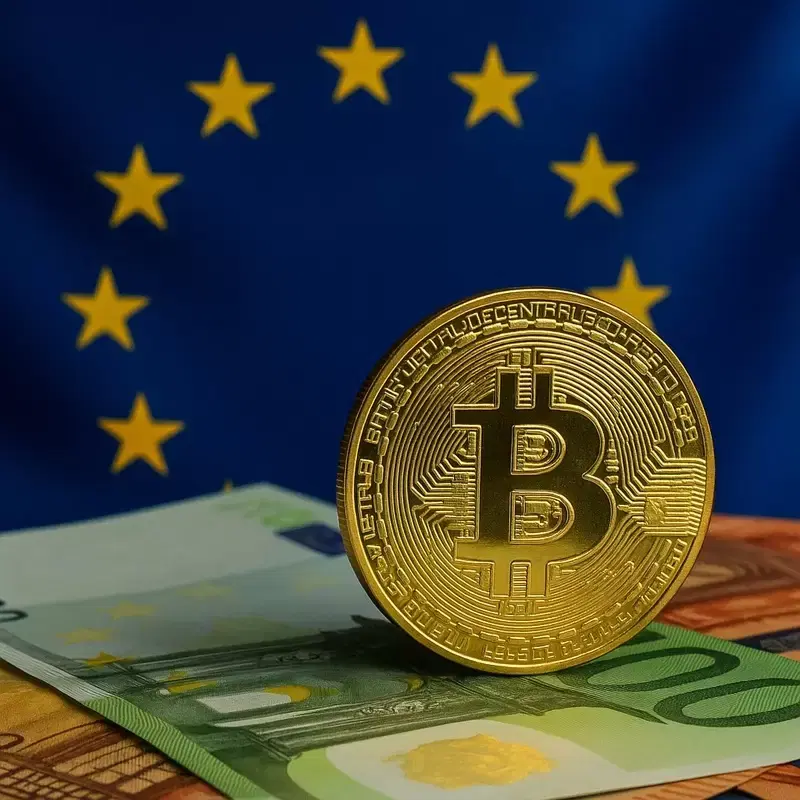
▲ European Union, Bitcoin (BTC)/ChatGPT generated image
A survey found that more than one in three European investors are willing to switch their primary bank to one that offers better cryptocurrency services. Cryptocurrency accessibility is no longer just an add-on feature for some investors but is emerging as a key factor influencing traditional banks' competition for customer retention.
Cointelegraph reported on May 23 (local time), citing a survey by Börse Stuttgart Digital, that approximately 35% of European investors are willing to switch their primary bank to a competing bank that offers stronger cryptocurrency features. The survey was conducted among approximately 6,000 investors in Germany, Italy, Spain, and France.
According to the survey, nearly one in five respondents expected their primary bank to offer cryptocurrency services within the next three years. Approximately 25% of respondents already held cryptocurrencies, and 36% expressed an intention to invest further within the next five years. This indicates that cryptocurrency is not a temporary interest but has established itself as an investment area repeatedly considered by some investors.
Cryptocurrency ownership rates were also evenly distributed across major European markets. Spain had the highest cryptocurrency ownership rate at approximately 28%, followed by Germany at 25%, Italy at 24%, and France at 23%. It was analyzed that existing cryptocurrency holders are more likely to find the limitations of traditional banks inconvenient and are more prone to move to financial institutions offering better accessibility.
The reasons investors desire banking cryptocurrency services are closer to integration and convenience rather than simple high-risk trading. Banks already operate identity verification, remittance, and asset management systems. If cryptocurrency is integrated into these systems, investors can reduce the burden of switching between separate platforms or learning new usage methods.
However, investor confidence has not yet been fully established. In the survey, 76% of respondents considered cryptocurrency regulations inadequate, and over 60% reported a lack of knowledge about digital assets. While interest has grown, investors are not sufficiently prepared to manage uncertainty themselves.
The European Union's MiCA (Markets in Crypto-Assets) regulation is influencing changes in investor perception. Cointelegraph reported that MiCA regulations targeting cryptocurrency service providers came into full effect on December 30, 2024. Nearly half of the respondents said that MiCA made cryptocurrencies feel safer and more attractive. However, the article pointed out that MiCA only brings order to the market and is not a mechanism to eliminate cryptocurrency investment risks.
The banking sector's response methods are also changing. Traditional financial institutions are moving towards collaborating with specialized technology providers rather than building cryptocurrency systems from scratch. Börse Stuttgart Digital was introduced as one of the early German companies to secure a MiCA license applicable across the European Union through its custody division in early 2025. Currently, this company provides back-end infrastructure to banks, brokers, and asset managers looking to add cryptocurrency functionalities.
The size of the European cryptocurrency market is also already significant. According to Chainalysis data, from July 2024 to June 2025, the volume of cryptocurrency transactions in Russia was approximately $376 billion, the UK was approximately $273 billion, and Germany was approximately $219 billion. Cointelegraph reported that these figures demonstrate that cryptocurrency activity has already established itself as a significant axis of financial activity in Europe.
The expansion of cryptocurrency services in the banking sector is becoming a new battleground for customer acquisition. Banks that once competed on deposit rates, loan terms, and app convenience are now in an environment where they must also offer regulated cryptocurrency accessibility. The survey result showing that approximately 35% of European investors are willing to switch their primary bank demonstrates that cryptocurrency services have become a real variable shaking bank customer loyalty.
*Disclaimer: This article is for investment reference only, and we are not responsible for any investment losses based on it. The content should be interpreted for informational purposes only.*
Newsletter
Get key news delivered to your email every morning
to leave a comment.