
to leave a comment.
Strengthening dominance across AI...Invested in 145 companies
40% of operating cash flow...7 times that of Alphabet, the 'big hand' in startups
Nvidia is pouring an unprecedented amount of capital to strengthen its dominance across the entire artificial intelligence (AI) industry.
Nvidia has invested 90 billion dollars (approximately 136 trillion won) in investments and partnership agreements over the past 16 months, the Financial Times (FT) reported on the 19th (local time).
The FT reported that an analysis of company disclosures and data from market research firm PitchBook revealed that Nvidia had invested approximately 47 billion dollars (about 71 trillion won) in investments and partnerships for one year until January 25. Subsequently, an additional 43 billion dollars (about 65 trillion won) was confirmed as investment targets over the next four months.
The number of partner companies exceeds 145. These include AI model developers, cloud providers, and AI infrastructure companies, covering the entire AI ecosystem.
This deal execution amount accounts for approximately 40% of the operating cash flow in the latest fiscal year. This significantly exceeds the deal proportion (6%) relative to the cash flow of Alphabet, which traditionally has the largest investment in startups among big tech companies.
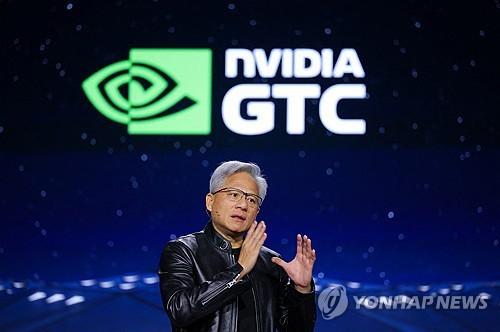
Jensen Huang, CEO, has emphasized that supporting foundational AI developers is a top priority, stating that providing support "as much as necessary, as little as possible" is "essential."
A Silicon Valley venture capitalist said, "Founders have started to learn that if they develop on the Nvidia ecosystem, they can receive investment from Jensen."
The core of the investment strategy is partnerships conditioned on compatibility with its proprietary interconnect technology, 'NVLink.'
Semiconductor design startup SiFive received investment from Nvidia after agreeing to make its chips compatible with NVLink, and Marvell, a chip company that designed Amazon's 'Trainium' AI accelerator, also signed a similar agreement in March along with a 2 billion dollar (approximately 3 trillion won) investment.
Nvidia is also encouraging its portfolio companies to use its open-source AI model, 'Nemotron.'
CEO Huang hopes that Nemotron will replicate the success of CUDA, Nvidia's most powerful competitive advantage and proprietary software platform.
As big tech hyperscalers (large-scale data center operators) emerge as Nvidia's largest customers and AI chip competitors, Nvidia is also focusing on fostering emerging AI cloud companies.
A prime example is CoreWeave, a cloud company that CEO Huang himself said "would not have existed" without Nvidia's support.
Earlier this month, it signed a contract with cloud company Iren to lease GPU capacity for 3.4 billion dollars (approximately 5.1 trillion won) over five years, while simultaneously making an equity investment of up to 2.1 billion dollars (approximately 3.2 trillion won). This structure allows it to simultaneously serve three roles: customer, supplier, and potential shareholder.
Last year's largest deal was a 20 billion dollar (approximately 30 trillion won) technology licensing and talent acquisition agreement with Groq, an inferential AI chip developer.
Nvidia stated, "We do not impose exclusive conditions on investments," adding, "AI is a highly competitive market where customers choose based on product performance."
Nvidia's expanded role is attracting scrutiny from competition authorities worldwide.
Nvidia disclosed in its business report that regulatory authorities in the United States, the European Union (EU), and the United Kingdom have made "broad requests for information" regarding investment and partnership agreements with foundational model developers.
Separately from equity investments, Nvidia additionally invested 95 billion dollars (approximately 143 trillion won) to secure component supply and manufacturing capabilities. It is also simultaneously seizing control of the supply chain, including investing 2 billion dollars each in optical component manufacturers Coherent and Lumentum, and 3.2 billion dollars (approximately 4.8 trillion won) in stock purchase rights for optical fiber manufacturer Corning.
Moon Surana, a portfolio manager at asset management firm Harding Loevner, analyzed that Nvidia's financial support helps suppliers' expansion plans while also "strengthening Nvidia's influence within the supply chain in an environment where capacity remains constrained."
At the heart of this aggressive investment is CEO Huang.
Patrick Little, CEO of SiFive, stated that CEO Huang has a deep understanding of how the AI market will unfold "5 to 10 moves ahead," adding, "Nvidia is not at all interested in moving a pawn one square forward. It wants the pawn to become a queen."
Newsletter
Get key news delivered to your email every morning
to leave a comment.