

to leave a comment.
Hello everyone! This is a senior analyst delivering the vibrant energy of the blockchain market. Recent market movements have been truly exciting, and positive signals are clearly being observed even amidst seemingly complex situations. Shall we go through the key issues together and forecast the future of the market?
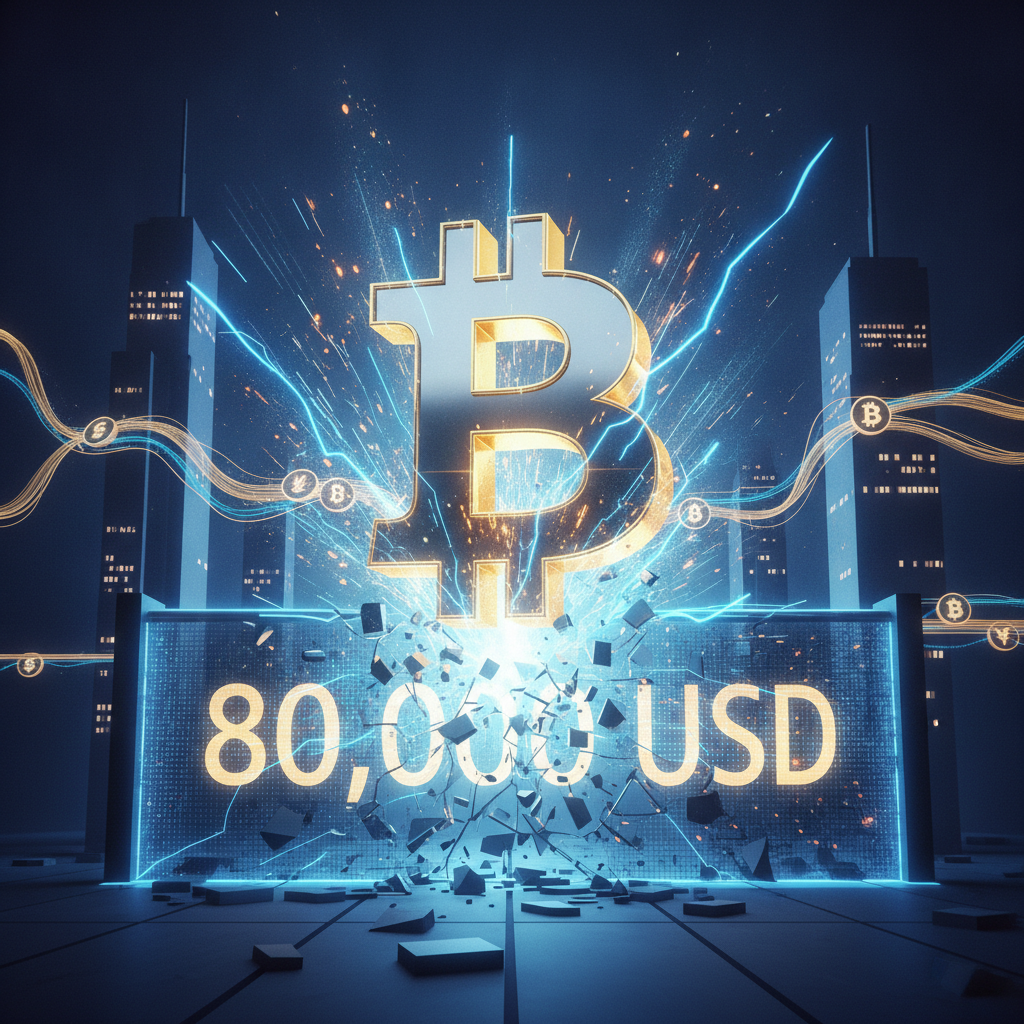
Bitcoin has finally crossed $80,000! This is noteworthy not just for the price increase, but because it's accompanied by several positive signals. Currently, Bitcoin is trading above $81,000, showing strong upward momentum.
In particular, institutional investors' movements are unusual. BlackRock's spot Bitcoin ETF (IBIT) saw a net inflow of $183.66 million, recording a net inflow conversion in just one day. This is a good sign that traditional financial market giants are recognizing Bitcoin not merely as a risk asset, but as a definite investment asset.
On-chain data analysis also continues to show positive prospects. Galaxy Digital's Head of Research analyzed that Bitcoin is currently above its 50-week moving average, which was a significant signal confirming the formation of previous bear market bottoms. Glassnode also diagnosed that a large volume of short liquidations is concentrated between $83,000 and $86,000, suggesting the possibility of further price increases due to short covering if this range is broken. Experts even value Bitcoin's fair value at $105,000, viewing the current period as a 'bargain sale'.
Along with Bitcoin's surge, the altcoin market is also showing vitality. Ethereum (ETH), in particular, is trading at $2,617.48, marking its highest price since January, and the open interest (OI) for Ethereum futures on major exchanges increased by approximately 10% in 24 hours. This is strong evidence that market interest and expectations for Ethereum are rising. According to Santiment, the number of Ethereum wallets with a non-zero balance reached an all-time high of 207 million, supported by Ethereum's broad holding base and increased utilization in staking and DeFi.
Solana's (SOL) strong performance is also noteworthy. The weekly transaction count on Solana-based decentralized exchanges (DEXs) surpassed 208 million, an astonishing achievement that outpaced the New York Stock Exchange (NYSE). This demonstrates the active nature and liquidity of the Solana network. Zcash (ZEC) also saw a 17% surge following news of a block generation time reduction upgrade, leading to massive liquidation of short positions. Some traders compare ZEC's current trend to Bitcoin's rapid surge in 2017, predicting further upside.
Ripple (XRP) also broke $1.40, fueling expectations for a spot ETF launch. Whale movements are active, with XRP holdings on Binance reaching their highest level in 69 days. Uniswap (UNI) surpassed 110 million in cumulative burns, accounting for 11% of its maximum supply, and Hyperliquid (HYPE) hit an all-time high, with long position whales recording $65.74 million in unrealized profits. Bankless co-founder declared that this is "altcoin season," emphasizing that the market's turning point is arriving faster than expected. Glassnode also analyzed that the altcoin market is not yet overheated, indicating room for further upside.

The growth of the Real World Asset (RWA) tokenization market is one of the most important trends in the blockchain industry. According to Binance Research, the on-chain RWA volume increased by 85.2% year-to-date to $34.18 billion, with tokenized stock volume showing explosive growth of 390.4% over the same period. While bonds and money market funds account for the largest share, the growth of tokenized stocks demonstrates blockchain's potential to revolutionize traditional financial markets.
With the U.S. Securities and Exchange Commission (SEC) paving the way for on-chain trading of tokenized stocks, major blockchain projects like Ethereum and Solana are excelling in this area. Morpho launched a lending product collateralized by Coinbase's stock tokens, and WisdomTree partners with MoonPay to offer tokenized U.S. Treasury funds. Coinbase is even pursuing the launch of perpetual futures based on individual stocks of large U.S. listed companies, and the Hong Kong Monetary Authority (HKMA) plans to introduce a wholesale Central Bank Digital Currency (wCBDC) for interbank settlements within the year to support tokenized government bond settlements. All these movements signify that blockchain is not just about cryptocurrencies, but is establishing itself as a core infrastructure for efficiently distributing and utilizing traditional financial assets.
The regulatory environment remains a point of contention, but the trend of positive change is growing stronger. In the U.S., despite a setback in the passage of the Clarity Act, the Commodity Futures Trading Commission (CFTC) is moving quickly, submitting cryptocurrency market regulations to the White House. Charles Schwab described the passage of the Strategic Bitcoin Reserve Act by the House committee as a "significant first step towards legislative enactment."
In the European Union (EU), the proportion of banks among crypto businesses registered under the MiCA regulatory framework has expanded to 23%. This is a good sign that European banks are accelerating their entry into the cryptocurrency market as the MiCA regulatory framework takes hold. Domestic and international traditional financial institutions are also actively adopting blockchain technology, with Hanwha financial affiliates expanding cooperation in digital finance, including stablecoins, with Abu Dhabi financial institutions, and Samsung Wallet hiring a stablecoin payment partnership manager.
Of course, regulatory scrutiny exists, as reported that the ECB President directly blocked Binance's entry into the EU. However, the blockchain industry believes that the SEC and CFTC can oversee the industry even without congressional intervention, and market growth will continue. The important thing is that blockchain technology has become a massive, undeniable trend, and discussions are now actively underway on how to safely and efficiently integrate this technology into the mainstream.
As of today, September 19, 2026, the blockchain market is undergoing remarkable evolution, driven by Bitcoin's strong leadership, active altcoin movements, and new growth engines in RWA and tokenized securities. Despite regulatory uncertainties, the active participation of traditional financial institutions and efforts towards technological integration send a strong message that the blockchain industry will continue to expand. Of course, security issues such as cyberattacks and money laundering must always be vigilantly monitored, but these are challenges that need to be addressed with technological advancement.
The market is not just seeing price increases; technological advancement and institutional acceptance are converging to usher in a new era. We encourage you all to pay attention to these changing trends and make wise analyses and judgments for successful investments!
", "originalLanguage": "KO", "title": "Blockchain Market, Hot Autumn! Bitcoin Breaks $80,000, Altcoin Rally, and Accelerated Institutional Entry!to leave a comment.
lily_r
·와, 블록체인 시장 정말 뜨겁네요! 대박이에요!
iris4
·이거 보면 또 사고 싶어지는데 어떡해요
이든176
·이거 정말 감성적이야